The Borchardt Conference is the premier triennial event highlighting applied research and real-world experience in environmental engineering and water utility operations. Co-sponsored by the University of Michigan’s Department of Environmental and Water Resources Engineering, MI-AWWA, MWEA, and EGLE, the conference brings together professionals and researchers to exchange knowledge and advance the field. Continuing Education Credits (CECs) and Professional Development Hours (PDHs) are available to those who meet the requirements. Download & Share the Conference Flyer
Meet Our Keynote Speakers
Borchardt Keynote Lecturer:
|
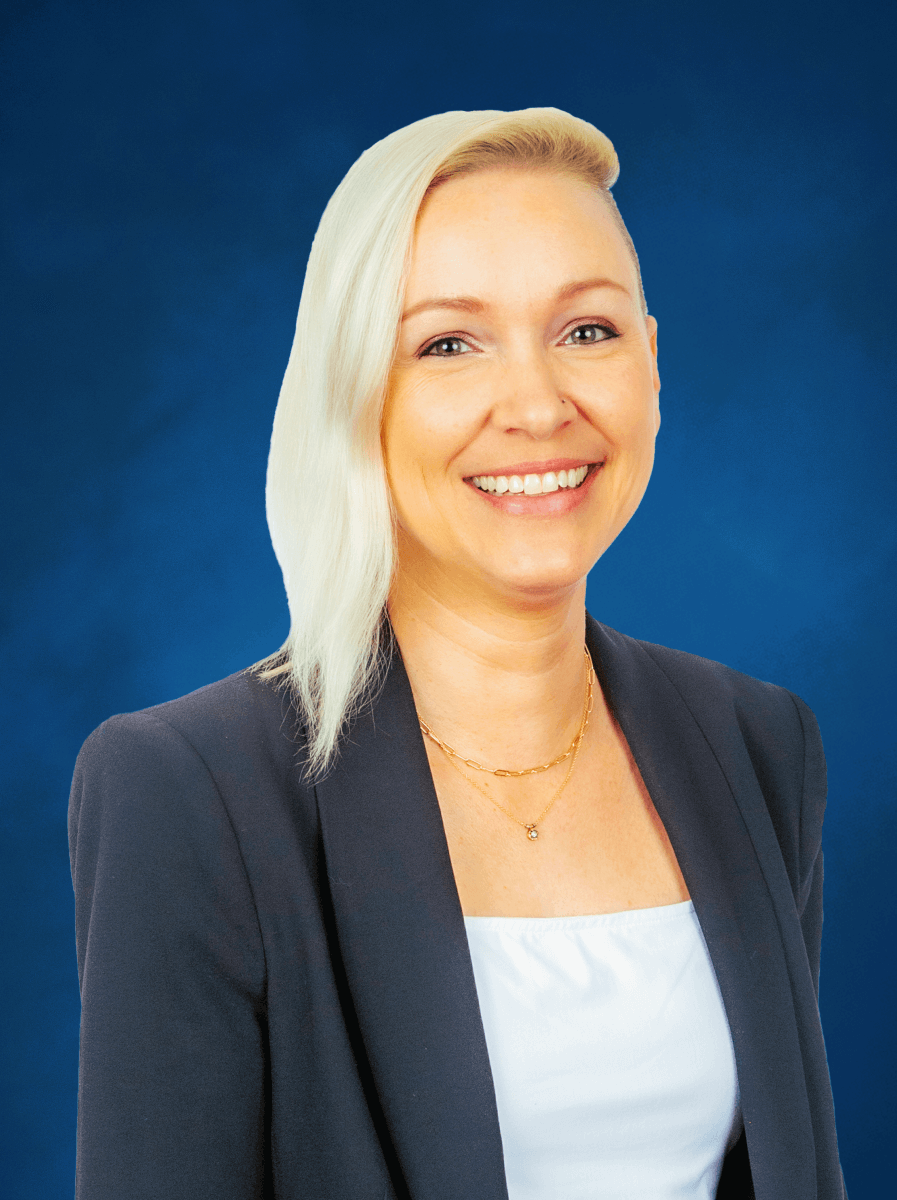
Megan H. Plumlee, Ph.D., P.E., BCEE
Research Director
Orange County Water District
Keynote Bio
Megan H. Plumlee, Ph.D., P.E., BCEE is the Director of Research for the Orange County Water District (OCWD) in Fountain Valley, California, where she oversees a team of research scientists and engineers conducting applied studies to support the District’s core operational needs. This includes evaluations of promising new technologies for the advanced purification process for potable reuse as well as applied research related to groundwater recharge. Dr. Plumlee has authored or co-authored over 40 peer-reviewed publications in scientific journals. Her current work includes oversight of OCWD’s ongoing PFAS pilot program testing various treatment options for removing PFAS from the region’s groundwater-based drinking water supply. Dr. Plumlee holds Doctorate and Master of Science degrees in Environmental Engineering and Science from Stanford University and a Bachelor’s degree in Chemistry with a minor in Physics from Pacific University. She is a registered Professional Civil Engineer in the State of California.
Keynote
Highlights from the Applied Research Program at OCWD: PFAS Challenges and Treatment Innovations for Drinking Water and Potable Reuse
This presentation will introduce the mission and current focus of the Research & Development (R&D) Department of the Orange County Water District (OCWD; the District) located in southern California. OCWD is a groundwater management agency of 227 staff that replenishes the Orange County Groundwater Basin, a vital aquifer supplying water to approximately 2.5 million residents across 19 large cities and water districts in north and central Orange County, ensuring water reliability and quality for the region. OCWD boasts the world’s largest potable reuse advanced treatment facility and in 2022 completed construction of the nation’s largest PFAS treatment plant at Yorba Linda Water District to restore local groundwater for drinking water supply. To support OCWD’s core operational needs, the eight-person R&D team investigates promising new technologies and approaches to improve water quality and increase efficiency in three core areas: advanced water purification (i.e., recycled water), groundwater recharge, and PFAS treatment in drinking water. PFAS has had a major impact on the District, as it is present above drinking water limits in over 100 of the 200 local drinking water supply wells across 10 cities in the District’s service area. The presentation will provide an overview of current PFAS-related research at OCWD, ranging from utility-led projects, university investigations, and start-up company tech trials. Topics include removal and destruction of PFAS in RO concentrate, measurement of broad-spectrum PFAS, and sequestration during managed aquifer recharge, among others.
|
 |
Glysson Keynote Lecturer:
|
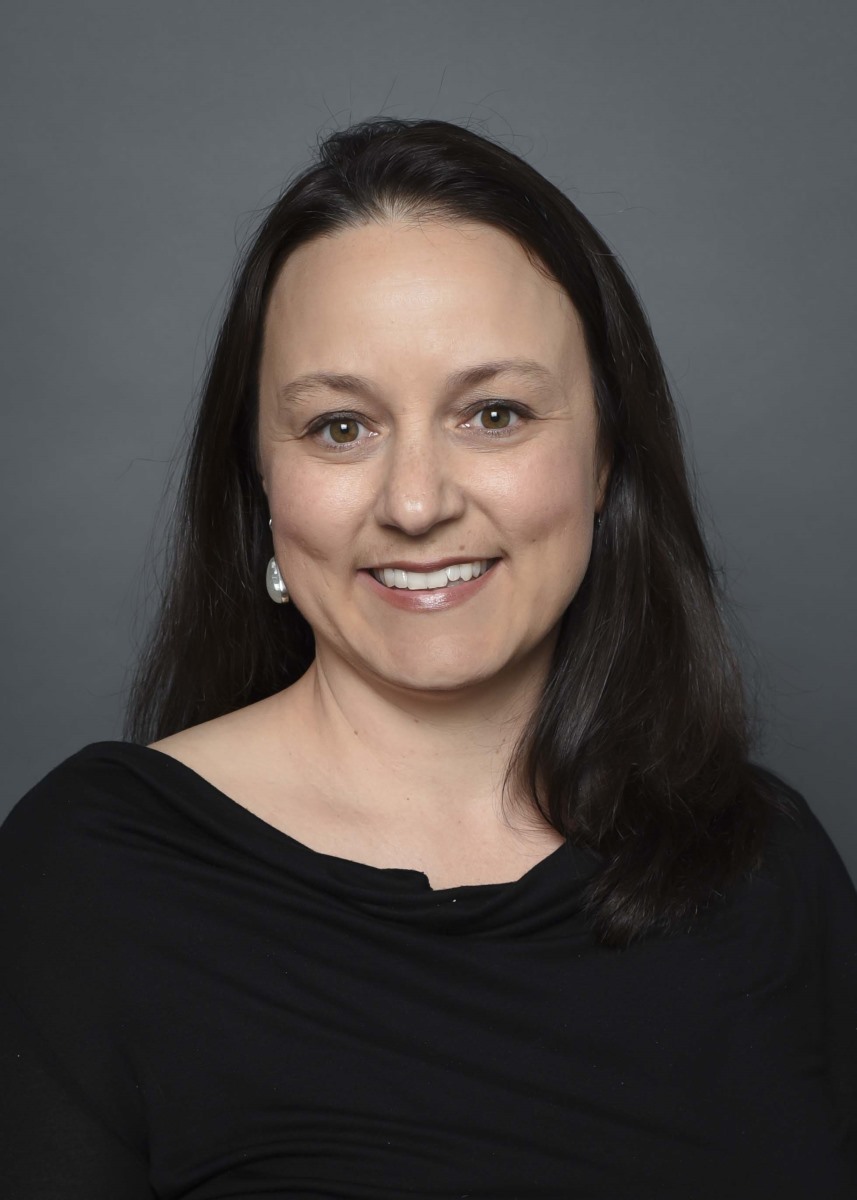
Belinda Sturm:
Director Kansas NSF EPSCoR
Professor and Ross McKinney Faculty Fellow
University of Kansas
Speaker Bio
Dr. Belinda Sturm is the Ross McKinney Endowed Professor in the Department of Civil, Environmental & Architectural Engineering at the University of Kansas and the statewide Director of the Kansas National Science Foundation EPSCoR program. Belinda joined KU in 2006 and served as the Associate Vice Chancellor of Research from 2018 to 2022 and Interim Vice Chancellor of Research from 2023 to 2024. At the national and international level, Belinda serves as on the Board of the Association of Environmental Engineering and Science Professors and Vice-Chair of the EPSCoR/IDeA Foundation, and she is active on several committees for the International Water Association, the Water Environment Federation, and the Water Research Foundation. Belinda earned her B.S. in Public Health from the University of North Carolina at Chapel Hill and her PhD in Civil Engineering and Geological Sciences from the University of Notre Dame. Dr. Sturm’s primary research interest is the use of microbial communities in public health protection, water reclamation, and resource recovery from municipal wastewater. In 2012, the American Academy of Environmental Engineers awarded Belinda an Excellence in Environmental Engineering honor award for her research on coupling nutrient removal with algae-mediated energy recovery. In 2022, the Water Research Foundation awarded Belinda the Paul L. Busch Award to further research on aerobic granular sludge.
Speaker Abstract
Low DO BNR Systems: Anaerobic selectors, Comammox, and SND
Utilities are increasingly adopting low dissolved oxygen (DO) biological nutrient removal (BNR) to reduce energy use and operating costs while still meeting stringent nutrient limits. Yet full-scale outcomes reflect a complex interaction between microbial selection, nitrification rates, sludge properties, and nitrous oxide emissions. A multi-year Water Research Foundation project evaluated low-DO BNR across 14 full-scale facilities, pilot systems, and bench-scale studies to identify when and how low-DO operation delivers reliable, energy-efficient performance.A central finding is the pronounced shift in nitrifying community structure under sustained low-DO conditions. While conventional high-DO systems are dominated by ammonia-oxidizing and nitrite-oxidizing bacteria, long-term low-DO operation selects for complete ammonia oxidizers (comammox) and ammonia-oxidizing archaea (AOA). Across participating facilities, comammox accounted for roughly two-thirds of the nitrifying community, with AOA comprising another significant fraction. These organisms possess higher oxygen affinities and the ability to complete nitrification within a single cell—providing a decisive competitive advantage under oxygen-limited conditions and enabling more efficient simultaneous nitrification–denitrification.By integrating microbial ecology with full-scale performance trends, this talk offers a practical framework to support utility evaluation, optimization, and design of low-DO BNR systems.
|
 |
|
AEESP Distinguished Lecturer:
|
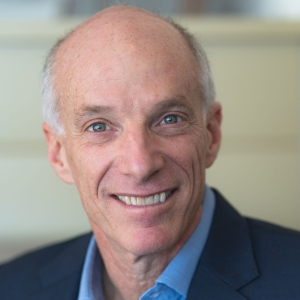
Dr. David Sedlak
Plato Malozemoff Distinguished Professor
Dept of Civil & Environmental Engineering
University of California, Berkeley
Speaker Bio
David Sedlak is the Plato Malozemoff Distinguished Professor in the Department of Civil & Environmental Engineering and the Director of the Berkeley Water Center at UC-Berkeley. His research focuses on the fate of chemical contaminants, with the long-term goal of developing cost-effective, safe, and sustainable systems to manage water resources. He is particularly interested in the development of local sources of water, including water reuse - the practice of using municipal wastewater effluent to sustain aquatic ecosystems and augment water supplies - as well as the treatment and use of urban runoff and groundwater from contaminated industrial sites. Dr. Sedlak is a member of the US National Academy of Engineering, chair of its Water Science & Technology Board and recipient of numerous awards including the Paul Busch Award for Innovation in Applied Water Quality Research and the Clarke Prize for Excellence in Water Research. He is also the author of "Water 4.0: The Past, Present and Future of the World's Most Vital Resource" and "Water for All: Global Solutions for a Changing Climate."
Speaker Abstract
Using Small-Scale Treatment Systems to Solve Some of the World’s Water CrisesThe creation of treatment systems capable of removing contaminants from water has been one of the most impactful achievements of environmental engineers. Because most of these technologies benefit substantially from economies of scale, centralized systems that involve expensive, vulnerable infrastructure usually have proven to be the most cost-effective means of improving water quality. Recent developments in manufacturing, sensing, materials science and biotechnology have the potential to alter this dynamic, enabling the deployment of small-scale treatment systems within existing water networks as well as the creation of autonomous "off-the-water-grid" systems. This lecture will introduce audiences to the latest developments in small-scale water systems by examining premise-scale water recycling systems and the potential for further deployment of such systems in other settings. By leveraging recent developments in small-scale treatment systems that do not require on-site operators or replenishment of chemical reagents, it may be possible to lower costs of water treatment and extend the benefits of modern water treatment to rural communities and citizens of low- and middle-income countries.
|
 |
|
|
|
|
|
|
|
Borchardt-Glysson Water Treatment Innovation Lecture:
|
|
|
|
|
|
Zhiyong Jason Ren
Professor of Civil and Environmental Engineering and the Andlinger Center for Energy and the Environment
Associate Director for Research, Andlinger Center for Energy and the Environment
Speaker Bio
Prof. Zhiyong Jason Ren (Linkedin:zjasonren) is a professor in the department of Civil and Environmental Engineering and the Andlinger Center for Energy and the Environment at Princeton University. He serves as the center’s associate director for research and was the acting director in 2020-2021. He leads the Princeton WET (Water & Energy Technologies) Lab with research and teaching focusing on the water–energy nexus, where they advance AI-enabled decarbonization and resource recovery in environmental and chemical systems. His group integrates electrochemistry, microbiology, and data science to uncover fundamental mechanisms and develop predictive models and scalable technologies. Jason has published one book, 250+ peer-reviewed articles, and holds 10 granted or pending patents. He has co-founded two startups with students and translated lab research to field applications. (https://ren.princeton.edu). Jason has been recognized with many awards including the 2024 Walter J. Weber, Jr. AEESP Frontier in Research Award, the 2021 Paul L. Busch Award, and the 2020 Walter L. Huber Research Prize. He is a Fellow of Royal Society of Chemistry and the International Water Association. He is an executive editor for Environmental Science & Technology (ES&T) and associate editor for ES&T and ES&T Letters. He received his Ph.D. in environmental engineering from Penn State University.
Speaker Abstract
Decarbonization: Quantifying and Directing Carbon Flows in Wastewater
Achieving carbon circularity requires integrated strategies to re-valorize waste carbon, mitigate emissions, and reduce reliance on non-renewable resources. Wastewater systems are shifting from “removal-centered” treatment toward carbon-aware, recovery-oriented management, where
traditional biological processes can be AI-enabled and electrified. This presentation highlights an integrated approach that couples data science with technology development to both understand and reshape wastewater carbon flows. We will present AI/ML frameworks that combine field
observations, literature mining, and mechanistically informed hybrid models to improve carbon accounting and pinpoint actionable levers to reduce emissions tied to microbial pathways. We will also discuss emerging electrified treatment and microbial electrochemical conversion technologies that convert organics and CO₂ into useful products that enable resource recovery and circular economy.
|
 |
Borchardt-Glysson Water Treatment Innovation Prize Guidelines
|
|
Nominations for the 2026 Borchardt-Glysson Water Treatment Innovation Prize are closed.
Detailed nomination guidelines and an application form are available here.
|
|
The Borchardt-Glysson Water Treatment Innovation Prize is an honor consisting of a $10,000 cash award to acknowledge a senior or mid-career professional whose accomplishments in the water or wastewater treatment fields have been nationally and internationally recognized. The Prize will be presented at the Borchardt Conference. As part of the award ceremony, the recipient is invited to deliver the Borchardt-Glysson Water Treatment Innovation Lecture.
Past Recipients:
2017 - Marc Edwards
2020 - Karl Linden
2023 - Detlef Knappe
|
Sponsorship Opportunities
 |
 |
 |
| $750.00 |
$1,500.00
|
$2,500.00
|
| Bronze Sponsors are appreciated for their generous support of the 2026 Borchardt Conference. Logos of sponsor organizations will be prominently displayed on the conference website, in distributed written materials, and on screens during oral program breaks throughout the event. |
Silver Sponsors play a vital role in the success of the 2026 Borchardt Conference and are recognized for their valued contribution. Logos of Silver Sponsors will be featured on the conference website, in distributed written materials, and displayed on screens during program breaks throughout the event.
As a token of appreciation, one complimentary registration is included at the Silver Sponsorship Level, providing full access to the conference program and networking events.
|
Gold Sponsors receive prominent recognition for their valued support of the 2026 Borchardt Conference. Logos of sponsor organizations will be featured on the conference website, in distributed written materials, and displayed on screens during program breaks throughout the event.
In appreciation of your partnership, one complimentary registration is provided at the Gold Sponsorship Level. Additionally, Gold Sponsors receive exclusive access to a job fair/table opportunity during lunches and poster sessions—an excellent venue to connect with attendees and emerging professionals.
|
| as of (04/20/2026) |
Thank you to our sponsors!
|
|
 |
 |
 |
|
 |
 |
 |
|
 |
 |
 |
|
 |
 |
|
|
|
|
|
Sponsorship Committee:
John Norton Jr. PhD, PE, Director of Energy, Research, & Innovation, Great Lakes Water Authority
Becky Lahr PhD, Drinking Water Quality Manager, City of Ann Arbor
Phil Argiroff, Former Assistant Division Director (Retired), Water Resources Division – EGLE
Bryan VanDuinen PE, Senior Engineer, Geosyntec Consultants of Michigan, Inc.
S. Joh Kang PhD, PE, Principal, Water & Energy Advisors, LLC
Financial contributions:
Contributions can be provided by credit card or check. If you need an invoice, please contact Joyce Kennedy at joykenne@umich.edu or 734-764-6024. W9 forms are available for those who need them.
By credit card:
MI-AWWA Borchardt Conference Website
By check:
University of Michigan 2026 Borchardt Conference Planning Fund
University of Michigan – CEE || Attn: Joyce Kennedy
1351 Beal Avenue, 142 EWRE
Ann Arbor, MI 48109-2138
Sponsor Registration Process:
Sponsors planning to attend the conference must complete conference registration.
Organizations sponsoring at the Gold or Silver level are eligible for one complimentary conference registration. To redeem this registration, please contact the MI-AWWA office at 517-292-2912 or info@mi-water.org.
Additional conference registrations beyond the complimentary ticket must be purchased separately through the conference registration system.
Conference Registration - NOW OPEN!
|
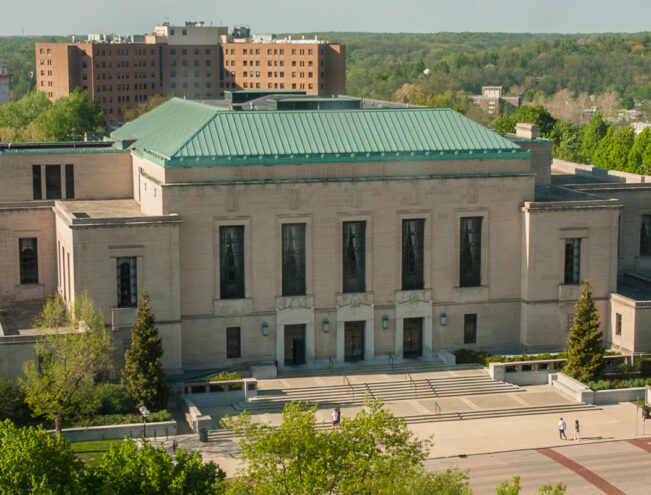
University of Michigan - Rackham Building
915 East Washington Street - 4th Floor
Ann Arbor, MI 48109-1070
United States
Parking Information
Metered public parking is available throughout Ann Arbor. A nearby parking option is the Maynard Parking Structure, operated by Republic/PCI Municipal Services, located at 324 Maynard Street, Ann Arbor, MI 48104.
For real-time parking availability, please view the Downtown Ann Arbor parking map. Parking Map
Conference Dates: May 5 and 6, 2026
Registration Rates:
2-Day Attendee: $300
1-Day Attendee: $180
Student Registration: $25 per day
Lunch and refreshments are included with registration.
|
|
|
|
ADVANCED Registration is now closed. You can register on site starting at 7:45 AM booth Tuesday and Wednesday.
|
|
|
Continuing Education Credits (CECs): Course Code #388 0.5 Technical in Drinking Water and Wastewater.
0.5 DW Technical for Day 1.
0.5 WW Technical for Day 2
Total for 1.0 for two days combined
|
|
Please note: The Borchardt Conference does not have an official host hotel or room block. The hotels listed below are recommended options for your convenience and are located near the conference venue.
| Graduate by Hilton Ann Arbor |
A boutique-style hotel located in downtown Ann Arbor, just steps from the University of Michigan campus. With creative interiors inspired by local history and collegiate tradition, this property offers comfortable rooms, an on-site restaurant and bar, fitness center, and free Wi-Fi — making it a great base for exploring the city and campus. The hotel is approximately a 10-minute walk to the University of Michigan’s Rackham Building
|
| Bell Tower Hotel |
A classic downtown Ann Arbor hotel located directly on the University of Michigan campus with easy access to shopping, dining, and cultural attractions. Guests enjoy amenities such as complimentary breakfast, free Wi-Fi, and a 24-hour fitness center. The hotel is within walking distance of the Rackham Building (about ~10–12 minutes on foot), making it a convenient option for conference attendees.
|
| Residence Inn Marriott - Ann Arbor Downtown |
A pet-friendly, all-suite hotel in downtown Ann Arbor with fully equipped kitchens, free hot breakfast, an indoor pool, free Wi-Fi, and a fitness center — great for both short and extended stays. Located about 0.6 miles (roughly a 10–12 minute walk) from the Rackham Building.
|
| Ross Executive Learning and Conference Center |
A full-service hotel and conference facility located on the University of Michigan’s Ross School of Business campus, offering comfortable guest rooms, meeting spaces, and convenient access to campus amenities. It’s an excellent choice for visitors looking to stay right in the heart of the University area. The hotel is within walking distance (about a 5–10 minute walk) to the Rackham Building, making it very convenient for conference attendees.
|
| The Inn at the Michigan League |
A unique, campus-centered hotel located within the historic Michigan League building on the University of Michigan’s central campus. Guests enjoy comfortable rooms and classic collegiate charm, plus easy access to nearby restaurants, shops, and sights. It’s just a short walk (about ~0.1 miles, roughly 2–3 minutes) from the Rackham Building, making it one of the most convenient lodging options for conference attendees.
|
|
Technical program questions to:
Lutgarde Raskin, PhD
Dept. of Civil and Environmental Engineering
University of Michigan
E-mail: raskin@umich.edu
Lina Belia, PhD, PEng
PrimodalUS&Canada
E-mail: belia@primodal.com
|
Conference information questions to:
Joyce Kennedy
Dept. of Civil and Environmental Engineering
University of Michigan
E-mail: joykenne@umich.edu
Phone : 734-764-6024
|
Registration questions to:
MI-AWWA
E-mail: info@mi-water.org
|
|
Abstracts for oral and poster presentations for the 2026 Borchardt Conference are closed.
Detailed abstract submission guidelines and an abstract submission form are available here.
Every three years, the Borchardt Conference brings together a diverse group of engineers, scientists, practitioners, and students to present and discuss the latest issues and advances in water and wastewater science and engineering. In addition to the Borchardt-Glysson Water Treatment Innovation Lecturer and three keynote speakers, presenters for oral and poster presentations will be selected from submitted abstracts on recent developments in the fields of drinking water and wastewater. Graduate and undergraduate students are encouraged to submit abstracts.
Presenters will be selected through a committee review of abstracts, which must be limited to one page and submitted with the accompanying form. Oral presentations are to be 15-17 min (with an additional 3-5 min Q&A).
|
|
Topics of interest for presentations include recent developments in the drinking water, wastewater, and water reuse fields, including but not limited to:
|
- New technologies/emerging treatment practices
- Trace organic/inorganic contaminants
- Direct and indirect water reuse and water conservation
- Nutrient removal, recovery, and control
- Nanotechnology for analysis and treatment
- Process residuals handling and disposal
- Microbial source tracking
- Climate adaptation strategies
- Emerging chemical and microbial contaminants
|
- Microbial topics in drinking water systems
- Disinfection and disinfection byproducts
- Corrosion control
- Advances in instrumentation and controls
- Real-time monitoring to improve system operation
- Sustainable solutions and resource recovery
- Decentralized and small footprint treatment
- Infrastructure asset management strategies
- Applications of AI, machine learning, data science,and modeling
|